

Cycling the Atlantik Wall route is about more than tracing history through landscapes, it’s also about connecting with the people who live alongside it today. Travelling by bike opens moments of interaction that simply wouldn’t happen otherwise: conversations with locals on the cycle path, chats over coffee in small cafés, and encounters with volunteers whose personal stories bring these historic sites vividly to life. It’s this human connection, as much as the physical journey, that makes exploring the route such a meaningful experience.
There’s a lesser known side to the Netherlands coast which adds to its fascination, isn’t immediately obvious, and is particularly easy to access on two wheels. From Zeeland in the south – where the Battle of the Scheldt in 1944 helped lay the groundwork for the Allied liberation of Europe – to Noord-Holland in the north, remnants of World War Two fortifications remain scattered along the coastal strip. Many formed part of Hitler’s Atlantic Wall, and all have a fascinating story to tell.
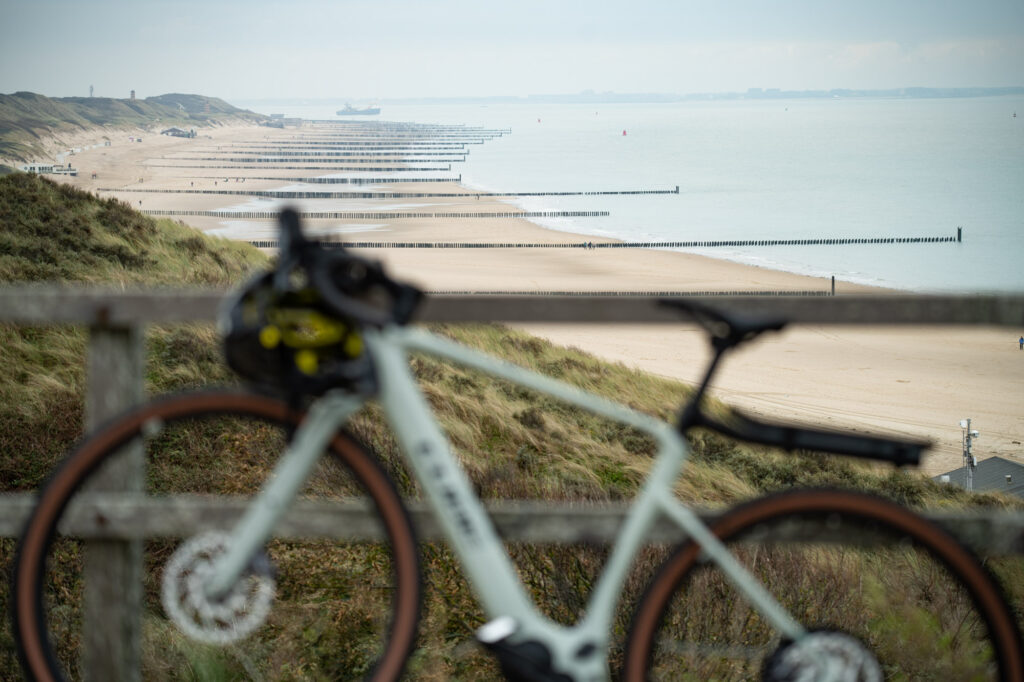
You’ve probably heard that there are more bicycles than people in the Netherlands, but this fact barely captures the extent to which getting around on two wheels is such a pleasure. A tour up the coast, following part of the Dutch LF Kustroute, makes it easy to explore this part of the Atlantic Wall. Along the way you’ll take in unspoilt sand dunes, extensive vistas and a spectacular crossing of the 32km long Afluitsdijk – one of the longest dykes in the world.
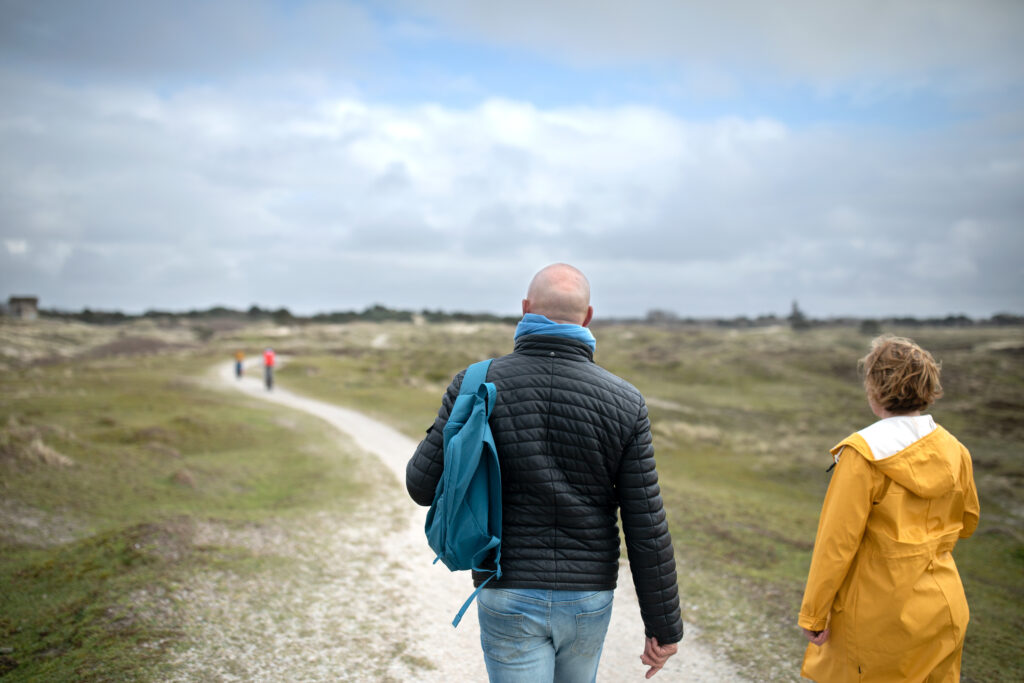
The Dutch propensity for grabbing a bike instead of getting in the car means you’ll be sharing the cycle path with anyone and everyone, from athletes putting in some training time to parents accompanying their children to school, or retired folk heading out for a cup of coffee and slice of Boterkoek at the local cafe. And, especially out of season, it’s easy to strike up a conversation – something that you can’t do from inside the bubble of a car.
Much of the Atlantic Wall preservation work is being carried out by dedicated volunteers, so that these important historic landmarks are preserved for future generations. Opening hours can be limited as a result, so it’s always worth checking in advance – Liberation Route Europe app has all of the relevant websites and is a huge help here. But it’s well worth making the effort.
At the Kroontjesbunker Huisduinen, for example, just three people have spent several years painstakingly clearing, cleaning and restoring the interior of this Luftwaffe command and control bunker, including the original double-sided, illuminated map in the control room. It’s open to visitors on only two days a year, in May and September, but it’s an extraordinary record of the latter days of the war. Nearby, the Atlanktikwall Centrum Huisduinenen is also well worth a visit.
Tucked away further south, in the dunes that separate Zeeland from the sea, is an entire bunker complex that’s been extensively restored by local man John Daane, whose own family was profoundly affected by the Nazi occupation. Bunkerverhalen is only open to visitors by prior arrangement, so be sure to plan ahead. The nearby Bunkermuseum Zoutelande also has limited opening hours, but features two beautifully restored bunkers with displays documenting their history.
Other fortifications have been converted to museums, the better to tell their stories. The Engelandvaarders Museum in Noordwijk, a former ammunition bunker, has been transformed to tell the story of the Dutch people (known as Engelandvaarders) who risked their lives to escape the German occupation, mostly via small boats across the North Sea or overland routes through neutral or unoccupied countries, to reach the safety of Great Britain.
After being thoroughly interrogated, they joined the Allied forces, often returning home to work for the resistance. The nearby Atlantikwall Museum, meanwhile, encompasses twelve bunkers linked by a 500m tunnel through the dunes, giving an impression of the sheer engineering effort that went into defending this stretch of coast.
The Kazemattenmuseum at the Afsluitdijk, at the dyke’s eastern end, tells the story of the fortifications that were built – and then expanded upon by the Nazis – to prevent an invading army from using the dyke to capture Noord-Holland. Further west, the port of IJmuiden features several surviving bunkers and a museum run by highly knowledgeable volunteers, who really help bring these historic fortifications alive.
The Polderhuis Museum‘s distinctive Sherman tank – sat proudly atop the dyke at Westkappelle – is impossible to miss, but you should definitely also make time for the excellent coffee and cake that they serve here. And every Atlantic Wall trip should include the astonishingly comprehensive Liberation Museum Zeeland, which warrants a day’s visit all on its own.
The story that these historic sites tell is one of failure: the Atlantic Wall was unsuccessful in preventing the Allied liberation of Europe in 1945. But the remaining sites are impressive feats of engineering – something which the Dutch are particularly well placed to appreciate, having reclaimed vast tracts of land from the sea.
Along the Kustroute, whether you’re popping into a local cafe for refreshment or visiting one of the hidden Atlantic wall treasures, you’ll often find yourself marvelling at the effort that’s gone into separating land from water. And really, there’s no better place from which to admire this ingenuity, than from the saddle of a bicycle. The Netherlands and two wheels just go together.
Ultimately, the Atlantik Wall is best experienced at a human pace, where history, landscape and local stories come together through small, shared moments along the way, many of them sparked simply by travelling on two wheels.
For inspiration and planning, check out:
Atlantik Wall website or download the Discover the Liberation Route Europe mobile app
Opening times vary and can be limited, particularly out of season – always check before travelling.
Bunker Day, which is in May (the exact date varies year by year), is a significant date on which some bunkers that are normally closed to the public are open for viewing.